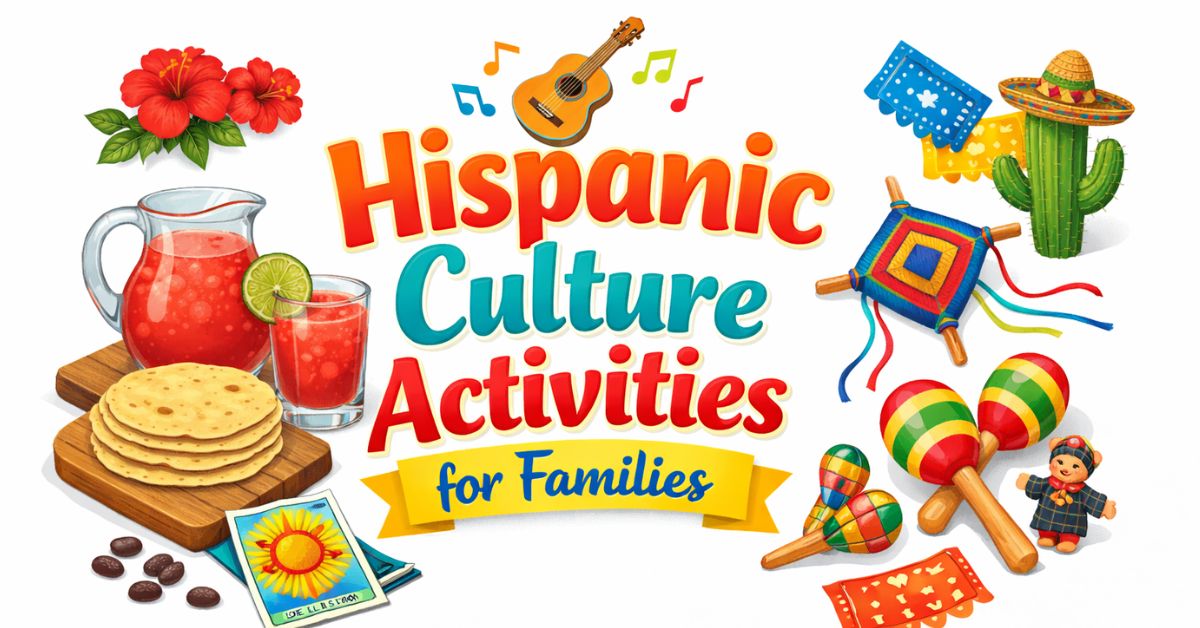
Hispanic culture activities
The flour was everywhere. It was on the countertop, on the floor, and somehow miraculously clinging to the tip of my seven-year-old’s nose. We were attempting to make tortillas from scratch for the first time, and let’s just say my kitchen looked less like a Pinterest board and more like a snowstorm had hit a taco truck.
But then, I heard it: the giggles. My kids weren’t stressed about the perfectly circular shape of the dough, which currently looked more like a map of Australia. They were feeling the texture of the masa, smelling the toasted corn on the griddle, and asking a million questions about why we were doing this.
In that messy, flour-covered moment, I realized that teaching culture isn’t a formal lesson plan. It’s a feeling. It’s the sound of a specific rhythm, the taste of a family recipe, and the stories we tell while our hands are busy.
Whether you are a parent wanting to honor your own roots, a teacher looking for Hispanic heritage activities for kids, or just someone who loves the vibrant warmth of Latin American traditions, this guide is for you. We’re going to dive into the beautiful, colorful world of Hispanic culture through crafts, food, music, and games.
Part 1: The Magic of Flavors Food & Kitchen Activities
In Hispanic culture, the kitchen is the pulse of the family. It’s where the best secrets are shared and where the secret ingredient is always a bit of extra love and maybe a little extra garlic.
1. The Tortilla Challenge: Masa and Memories
If you want to start with something foundational, start with corn. Before there were supermarkets, there was the milpa cornfield.
- The Activity: Buy a bag of masa harina corn flour. It only requires water and a pinch of salt.
- The Connection: Let the kids squish the dough. It feels like playdough but smells like sunshine. If you don’t have a tortilla press, use a heavy frying pan to squish the dough balls between two pieces of parchment paper.
- The Lesson: Talk about how this simple grain has fed millions of people for thousands of years. It’s a lesson in resilience and simplicity.
2. Tropical Refreshment: Aguas Frescas
When the afternoon sun gets hot, nothing beats an agua fresca. These are light, fruit-based drinks that are staples in Mexico and Central America.
- The Recipe: Blend watermelon, pineapple, or even hibiscus flowers (jamaica) with plenty of water and just a touch of sugar.
- The Fun Part: Let the kids be the tasters. Should it be sweeter? More lime? Making these together teaches kids about the natural bounty of the earth.
3. The Sweet Bread Scavenger Hunt
Visit a local panadería bakery. The smell alone is a cultural experience!
- The Activity: Give each child a small budget to pick out two different types of pan dulce. Look for conchas, which look like seashells, or orejas, which look like ears.
- The Conversation: Back at home, cut them into pieces and have a family taste test. Which texture do they like best? This is a great way to support local Latino businesses while enjoying a delicious tradition.
Part 2: Hands-On Creativity Latino Culture Crafts
Art in Hispanic cultures is often bright, symbolic, and deeply connected to nature and history. These Latino culture crafts are perfect for rainy afternoons.
4. Papel Picado: The Art of Celebration
You’ve seen these beautiful, chiseled paper banners hanging at festivals. They represent the wind and the fragility of life, but to a kid, they just make the house look like a party.
- How to do it: You don’t need to be a master artist. Use bright tissue paper. Fold it like you’re making a paper snowflake, but keep the shapes more geometric.
- The Twist: String them up across your living room or classroom. It instantly transforms a boring room into a celebration of Hispanic traditions.
5. Ojos de Dios
Originally from the Huichol people of Mexico, these are woven symbols of protection and seeing the unknown.
- Materials: Two sticks (twigs from the yard work great) and scraps of colorful yarn.
- The Process: Cross the sticks and wrap the yarn in a diamond pattern. It’s a rhythmic, meditative craft that helps kids practice fine motor skills.
- The Heart: As they weave, talk about how we look out for one another in a family.
6. Guatemalan Worry Dolls Quitapenas
Does your little one have a hard time sleeping or feel a bit anxious? This tradition from Guatemala is magic.
- The Craft: Use clothespins, scraps of fabric, and thread to make tiny dolls.
- The Tradition: Tell your kids the legend: you tell your worry to the doll, put it under your pillow, and the doll does the worrying for you while you sleep. It’s a beautiful emotional tool wrapped in a craft.
Part 3: Rhythm, Movement, and Music
You can’t talk about Hispanic culture without talking about the beat. Music is how history is kept alive.
7. The Living Room Dance-Off
Don’t worry about being a professional dancer. The goal is joy.
- The Playlist: Search for Cumbia, Salsa, or Merengue.
- The Activity: Show the kids the basic one-two-three pause of Salsa. Or, put on some accordion-heavy Vallenato from Colombia and just jump around.
- The Impact: Music lowers cortisol and builds bonds. Plus, seeing Mom or Dad dance “silly” is a memory they’ll treasure.
8. DIY Percussion: The Maraca Shake
- The Build: Fill empty plastic eggs or dry water bottles with beans, rice, or beads. Tape them shut securely; you don’t want a bean explosion in your rug.
- The Jam Session: Use your new instruments to keep time with the music. It teaches kids about syncopation and the African and Indigenous roots of Latino rhythms.
Part 4: Family Games and Storytelling

Games are the social glue of Hispanic cultural activities. They are often loud, fast-paced, and full of laughter.
9. Lotería: The Ultimate Icebreaker
Think of this as Mexican Bingo, but instead of numbers, you use iconic images like El Sol, the sun; La Luna, the moon, or El Valiente, the brave man.
- How to Play: Use dried pinto beans to mark your card. It’s a fantastic way to learn Spanish vocabulary naturally.
- Pro Tip: Let the kids take turns being the caller, describing the pictures in Spanish or English.
10. The Power of Dichos Proverbs
Hispanic culture is rich with short bits of wisdom called refranes.
- The Activity: Share a dicho of the week. For example: Camarón que se duerme, se lo lleva la corriente. The shrimp that falls asleep gets carried away by the current.
- The Discussion: Ask the kids what they think it means. It’s a fun way to talk about being prepared and paying attention, all while connecting to a deep oral tradition.
Part 5: Connecting with the Natural World
Many Hispanic traditions are rooted in a deep respect for the Earth and the changing of the seasons.
11. Growing a Three Sisters Garden
This is an ancient agricultural tradition (corn, beans, and squash) used by Indigenous peoples throughout the Americas.
- The Activity: Plant these three together in a small patch or even a large pot. The corn provides a pole for the beans to climb, the beans put nitrogen in the soil, and the squash leaves shade the ground to keep it moist.
- The Lesson: It’s a perfect metaphor for family, how we all help each other grow in different ways.
Why These Activities Matter
When we engage in these activities, we aren’t just staying busy. We are building bridges. We are teaching our children that the world is wide, colorful, and full of different ways to be happy. We are showing them that different is just another word for interesting.
The kitchen might be a disaster zone when you’re done, and you might have yarn scraps stuck to your socks for a week, but the memories of those laughs? The taste of that first warm tortilla? That stays forever. These moments of connection are the true heritage we pass down.
Your Turn
Which of these activities will you try first? You don’t have to do them all. Just pick one, maybe the agua fresca or the Lotería, and see where the journey takes you.
Will you start with a kitchen adventure or a colorful craft this weekend? Pick your favorite and let the celebration of culture begin in your own home.
FAQ
What is the best age to start teaching kids about Hispanic heritage?
Any age! For toddlers, it’s all about sensory play: the smell of cilantro, the bright colors of papel picado, or the rhythm of a drum. As kids get older, you can introduce the history and stories behind the Hispanic traditions.
Do I need to speak Spanish to do these activities?
Not at all. While these activities are a great way to learn a few words of the day, like harina for flour or mariposa for butterfly, the goal is cultural appreciation. Music, art, and food are universal languages that everyone speaks.
What are some simple Latino culture crafts for a classroom?
Papel picado and Ojos de Dios are huge hits in classrooms because the materials, tissue paper, string, and craft sticks are inexpensive and easy to find. They also make for a beautiful, colorful classroom display.
How can I celebrate Hispanic Heritage Month on a budget?
Most of the best Hispanic heritage activities for kids are low-cost. Making tortillas costs just a few dollars for a bag of masa, and playing Lotería or listening to folk music online is virtually free. It’s more about the time spent together than the money spent on supplies.
What if I’m not Hispanic? Can I still do these activities?
Absolutely. Celebrating other cultures is a beautiful way to build empathy and global awareness in children. As long as you approach the traditions with respect and a desire to learn, it’s a wonderful way to honor the vibrant contributions of the Latino community.